
Table of content
Why Is Split a Good Base for Wine and Olive Oil Tasting?
Where to Go Wine and Olive Oil Tasting in Split
Zinfandel Food & Wine Bar
Markus Wines Tasting Room
Uje Oil Bar
Kaštela: Wine Tasting Where Zinfandel Was Born
The Zinfandel Story
Visiting a Winery in Kaštela
ZinFest in Kaštela
Olive Oil and Wine Tasting on Brač and Šolta
Brač: The Olive Oil Museum in Škrip and Stina Winery in Bol
Šolta: Dobričić Wine and Protected Olive Oil
Going Further: Hvar and the Krka Area
Wine and Olive Oil Tasting Near Split at a Glance
Which Croatian Wines and Olive Oils Should You Try?
When Is the Best Time for Wine and Olive Oil Tasting Near Split?
How to Taste Olive Oil Like a Local
Tips for Booking a Wine Tasting Near Split
Frequently asked questions (FAQ)
Where to stay in Split?
CONCLUSION
Related blogs
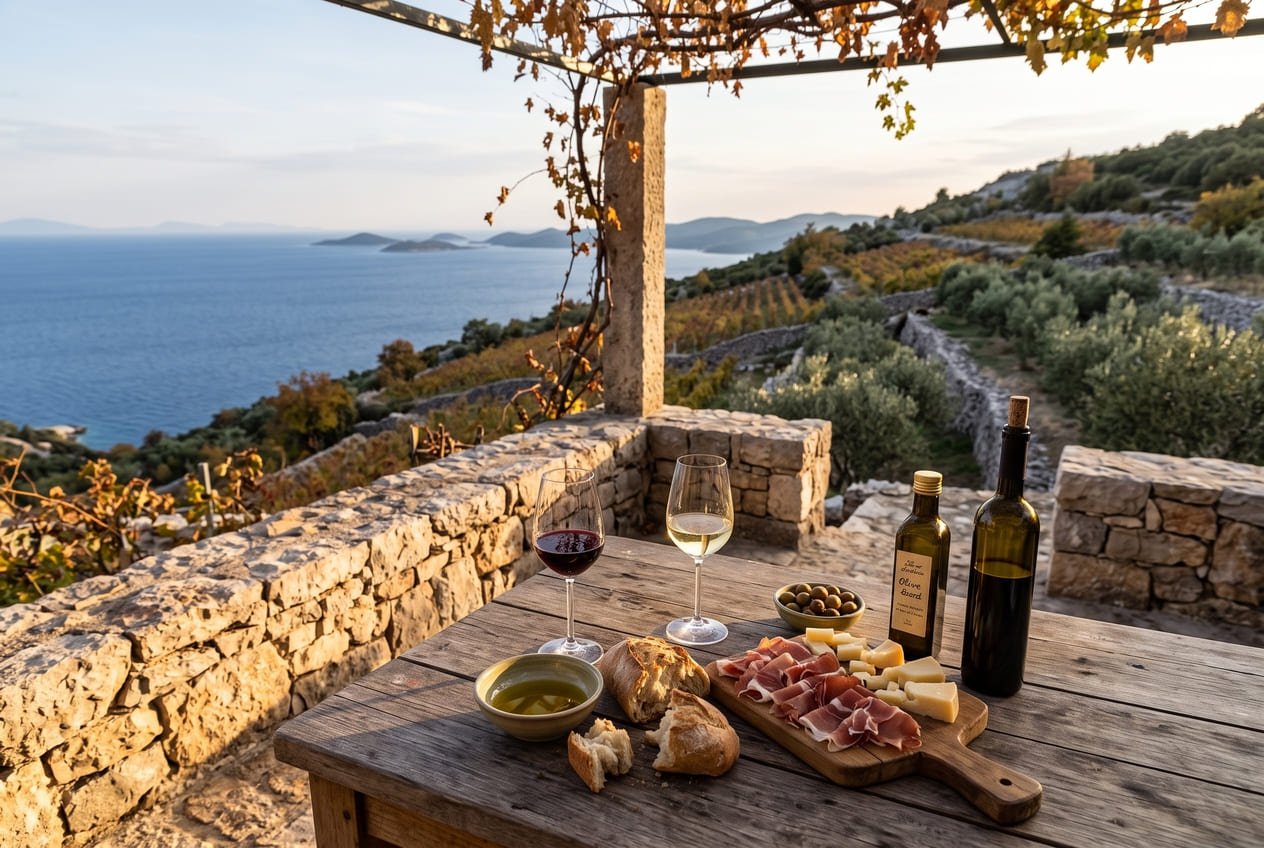
Dalmatia has been making wine and pressing olives for centuries, and Split sits right in the middle of it. Within an hour of the city you can taste Zinfandel in the vineyards where it was born, sample award-winning olive oil in a 19th-century oil mill on Brač, or sip island wines made from grapes that grow almost nowhere else in the world.
You do not even need to leave the Old Town to start. A handful of wine bars and an olive oil bar inside and around Diocletian’s Palace pour local wines and oils every day of the year.
This guide covers the best places for wine tasting in Split and the surrounding area, the local grapes and olives worth knowing, when to go, and how to book a tasting without a car.
Key takeaways
- In the city: Zinfandel Food & Wine Bar and the Markus Wines tasting room pour Croatian wines, and Uje Oil Bar offers guided olive oil tastings.
- Kaštela, between Split and Trogir, is the home of Crljenak Kaštelanski, the grape DNA testing showed to be the same as Zinfandel.
- Brač and Šolta are a short ferry ride away and both produce olive oil with EU protected designation of origin.
- Autumn is harvest time: grapes are picked in early autumn, and the olive harvest runs from late October into November.
- Book winery visits in advance, especially outside summer, when many wineries open by appointment only.
Why Is Split a Good Base for Wine and Olive Oil Tasting?
Split is surrounded by some of Dalmatia’s most interesting wine and olive oil areas, and most of them can be reached in under an hour by car or ferry. Kaštela, the birthplace of Zinfandel, is just outside the city. The islands of Brač and Šolta, both known for olive oil and indigenous grapes, are a short boat ride from the harbour, and Hvar is easy to add on a longer day.
That makes it simple to stay in the centre and plan tastings as day trips, then come back in the evening for dinner in the Old Town. If you want to understand the food that goes with these wines, our guide to experiencing Split’s gastronomy like a local is a good place to start.
Where to Go Wine and Olive Oil Tasting in Split
If you only have an evening, you can taste Dalmatian wine and olive oil without leaving the Old Town. These places are a few minutes’ walk from each other and from the Peristyle.
Zinfandel Food & Wine Bar
Zinfandel, at Marka Marulića 2 in the Old Town, has been open since 2013 and focuses almost entirely on Croatian wine. The list includes more than a hundred Croatian wines, over 30 of them by the glass, and the kitchen offers a five-course tasting menu paired with five Dalmatian wines. It is also one of the easiest places in town to try Crljenak, the local name for Zinfandel.
Markus Wines Tasting Room
Markus Wines is a winery from Kaštel Novi that focuses on indigenous grape varieties. Its tasting room in Split is at Marasovića 2, near the steps up to Marjan Hill, and pairs the wines with regional flavours. Tastings can be booked through the winery’s website.
Uje Oil Bar
Uje Oil Bar is the best-known place for olive oil tasting in Split. It is at Dominisova 3, inside Diocletian’s Palace, and combines a restaurant with a shop. Uje offers guided olive oil tastings, uses olive oil in every dish (even the ice cream) and sells Croatian oils and olive products to take home.
For a cheaper, more casual option, local producers also sell olive oil at Pazar, the green market. Our guide to local markets in Split explains where to find it and what to ask the vendor.
Kaštela: Wine Tasting Where Zinfandel Was Born
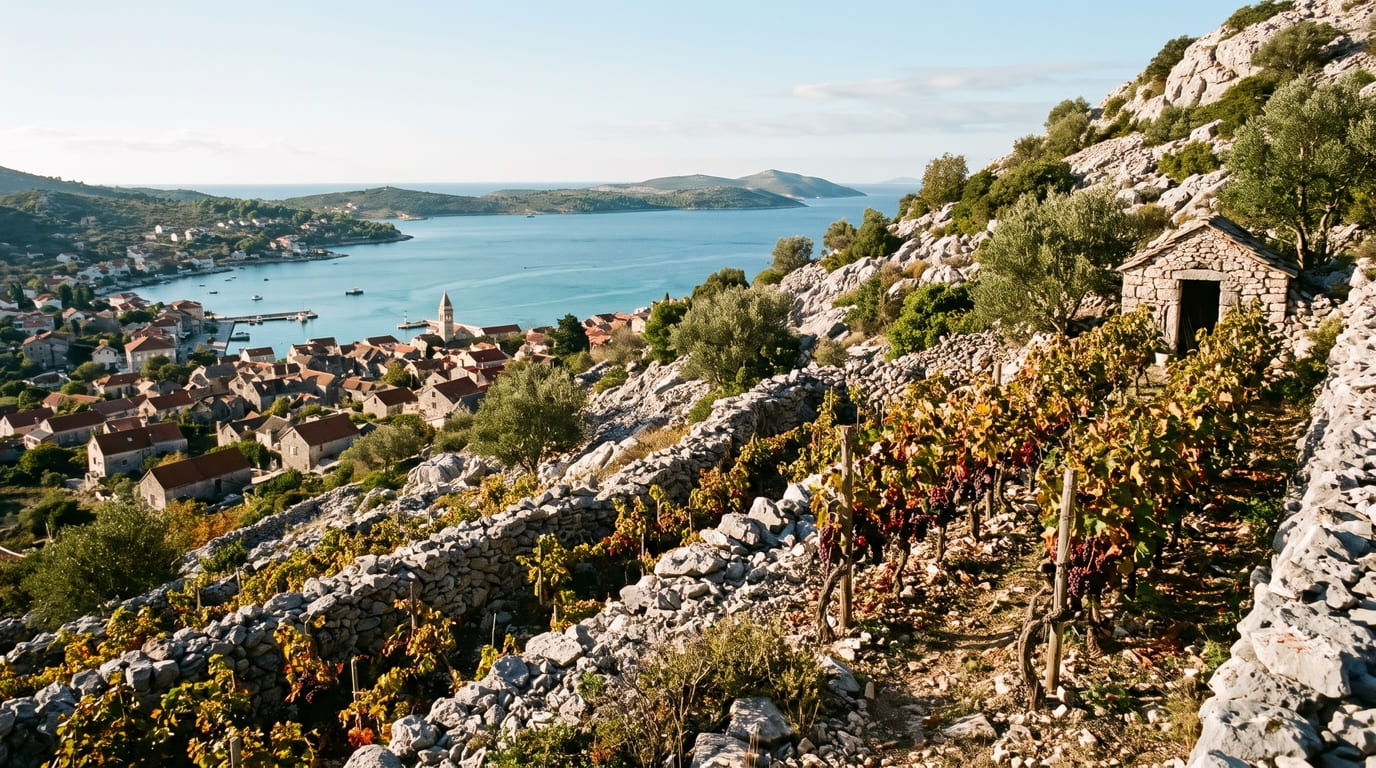
Kaštela, the string of small coastal towns between Split and Trogir, is the home of Crljenak Kaštelanski, the grape that DNA testing showed to be the same variety as California’s Zinfandel. For wine lovers, it is the most rewarding tasting trip you can make from Split without taking a ferry.
The Zinfandel Story
For decades, Zinfandel was considered an American grape. In 1967, Austin Goheen of the University of California, Davis noticed that it looked like Italian Primitivo, and later research by Carole Meredith, also at UC Davis, used DNA fingerprinting to trace its roots. Working with Croatian researchers from the University of Zagreb, the team found a matching vine in a vineyard in Kaštel Novi, where locals called it Crljenak Kaštelanski.
The same research showed that Zinfandel is one of the parents of Plavac Mali, Dalmatia’s most important red grape. The other parent is Dobričić, an old variety from the island of Šolta. In Croatia, the grape also goes by its older name, tribidrag, which you may see on some labels.
Visiting a Winery in Kaštela
Putalj is one of the best-known wineries in Kaštela, on the slopes of Kozjak Mountain above Kaštel Sućurac. The tour runs once a day in the afternoon and includes transfer from the centre of Split, a walk through the vineyard and cellar, tasting from the fermentation tanks and the bottle, the estate’s own extra virgin olive oil, and a cellar table of pršut, cheese and bread. At the time of writing, the tour costs EUR 130 per person, it is for adults only, and bookings are made through the online calendar and confirmed by email.
Markus Wines also has its winery in Kaštel Novi, so if you liked the wines in the Split tasting room, you can ask about visiting the estate.
ZinFest in Kaštela
If you are in Split in mid-November, look out for ZinFest, the Adriatic Traditional Wine & Food Fair dedicated to Crljenak and its relatives. ZinFest 2026 takes place from 11 to 14 November 2026.
Olive Oil and Wine Tasting on Brač and Šolta
Brač and Šolta are the two closest islands to Split, and both are known for olive oil with EU protected designation of origin. Regular ferries and catamarans leave from Split harbour, so either island works as a relaxed day trip. Check current timetables before you go, as they change between summer and winter, and see our guide to island hopping from Split for more ideas.
Brač: The Olive Oil Museum in Škrip and Stina Winery in Bol
In 2022, Bračko maslinovo ulje (olive oil from Brač) was registered as a protected designation of origin across the EU. The oil is made mainly from the Oblica variety, and olive groves cover about a third of the island’s farmland.
The best place to see that tradition up close is the Museum of Olive Oil in Škrip, about 9 km from the ferry port in Supetar. The Cukrov family restored an oil mill founded in 1864 and opened it as a museum in 2013. You can see the original press and tools, then taste the family’s award-winning olive oil and buy a bottle to take home.
For wine, head to Stina on the seafront in Bol. The winery is known for Pošip (white) and Plavac Mali (red and rosé), and its tasting room looks straight into the cellar. Visits outside summer are by appointment, so contact the winery before you travel.
Šolta: Dobričić Wine and Protected Olive Oil
Šolta is the quieter choice, about 30 minutes by fast boat from Split to the port of Rogač. In 2016, Šoltansko maslinovo ulje became one of the first Croatian olive oils with EU protected status. At least half of it must come from the Levantinka variety, with Levantinka and Oblica together making up at least 95%.
Šolta is also the home of Dobričić, a dark red indigenous grape and one of the parents of Plavac Mali. Several family wineries, including Kaštelanac and Kalebić Jakupčević in Gornje Selo and Marinac and Balić in Srednje Selo, offer wine and olive oil tastings.
Going Further: Hvar and the Krka Area
With a full day, you can go further. On Hvar, wineries such as Tomić in Jelsa and Zlatan Otok in Sveta Nedjelja are known for Plavac Mali and the white Bogdanuša. On the mainland, Bibich near Skradin, about an hour’s drive from Split, makes wine from the local white grape Debit and is easy to combine with a visit to Krka National Park.
Wine and Olive Oil Tasting Near Split at a Glance
| Where | Location | What to taste | Getting there |
|---|---|---|---|
| Zinfandel Food & Wine Bar | Split, Old Town | Croatian wines by the glass, wine pairing menu | On foot |
| Markus Wines tasting room | Split, near Marjan | Wines from indigenous grapes | On foot |
| Uje Oil Bar | Split, Diocletian's Palace | Guided olive oil tasting | On foot |
| Putalj | Kaštel Sućurac | Zinfandel, Plavac Mali, olive oil | Transfer from Split included |
| Museum of Olive Oil | Škrip, Brač | Olive oil from Brač | Ferry to Supetar, then car or taxi |
| Stina | Bol, Brač | Pošip, Plavac Mali | Boat or ferry and road |
| Šolta family wineries | Gornje Selo, Srednje Selo | Dobričić, olive oil | Boat to Rogač |
Which Croatian Wines and Olive Oils Should You Try?
The best Croatian wines to try around Split are made from indigenous grapes such as Crljenak Kaštelanski, Plavac Mali, Pošip and Dobričić, while most local olive oil comes from the Oblica variety. Ask for these names at any tasting and you will get a real taste of Dalmatia rather than international styles you can find anywhere.
| Name | Type | Where you will find it | What to expect |
|---|---|---|---|
| Crljenak Kaštelanski | Red grape | Kaštela | The Croatian original of Zinfandel |
| Plavac Mali | Red grape | Brač, Hvar, Pelješac | Full-bodied reds with notes of carob, dried fig and spice |
| Dobričić | Red grape | Šolta | Very dark wine, one of the parents of Plavac Mali |
| Pošip | White grape | Brač and other islands | Fresh, elegant white |
| Bogdanuša | White grape | Hvar | Local island white |
| Prošek | Dessert wine | Across Dalmatia | Sweet wine from dried grapes |
| Oblica | Olive | Across Dalmatia | Fruity, slightly bitter and spicy, with an almond finish |
| Levantinka | Olive | Šolta | Main variety in Šolta's protected oil |
Plavac Mali wines are usually rich and high in alcohol and tannins, with typical aromas of carob, fig, sage, dark cherry and pepper. Oblica accounts for more than 60% of olive trees planted in Croatia.
When Is the Best Time for Wine and Olive Oil Tasting Near Split?
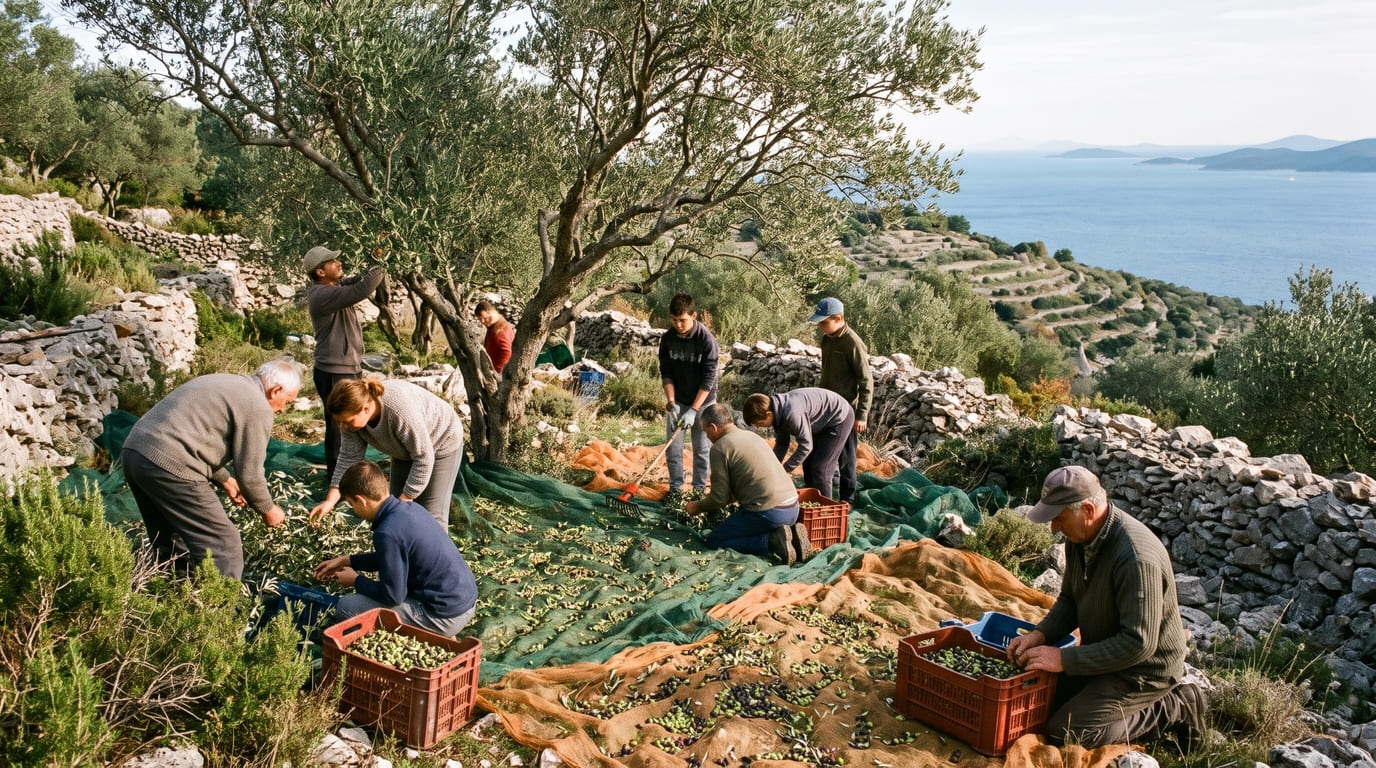
Autumn is the best season for tasting near Split: the grape harvest happens in early autumn, and the olive harvest usually starts in late October and continues into November. It is when Dalmatian families head to their groves, and many return to their home islands just to help with the picking.
Olives are still picked mostly by hand, taken to a nearby oil mill every day to be pressed. A family harvest takes three to eight days, often with lunch in the field, local wine and freshly pressed oil. Early harvest oils, picked from late October to early December, tend to taste greener and more peppery.
Summer is the easiest time for walk-in visits, as most wineries keep regular opening hours. In winter, many smaller wineries open by appointment only, but city wine bars stay open all year. For more on the seasons, see our month-by-month guide to Split and our article on Split in winter.
How to Taste Olive Oil Like a Local
Good olive oil is tasted on its own, from a small glass, before you try it with bread. At most tastings, the host will guide you, but these simple steps help you notice the difference between oils:
- Warm the glass in your hand for a minute, covering the top with your other hand.
- Smell the oil. Fresh extra virgin oil smells green: cut grass, green apple, tomato leaf or almond.
- Take a small sip and draw in a little air so the oil spreads across your tongue.
- Notice the bitterness and the peppery kick at the back of the throat. In fresh oil, both are signs of quality, not faults.
- Clean your palate with water or a slice of apple before the next oil.
When buying oil to take home, look for extra virgin on the label and, if possible, a protected designation of origin such as Bračko or Šoltansko maslinovo ulje. Keep it in a cool, dark place, and remember that liquids over 100 ml have to go in checked luggage on most flights.
Tips for Booking a Wine Tasting Near Split
Book ahead, plan transport, and leave time to enjoy the food. A few practical tips:
- Reserve in advance. Small family wineries have limited space, and outside summer many open by appointment only.
- Do not drive after tasting. Choose a tour with transfer from Split, such as Putalj, or take a taxi.
- Check age rules. Some tours, including Putalj, are for adults only.
- Combine wine and oil. Many wineries also make their own olive oil and include it in the tasting.
- Go hungry. Tastings usually come with pršut, cheese and bread, and sometimes a full meal.
- Buy directly from the producer. It is often the only way to get small-batch wines that are not exported.
Frequently asked questions (FAQ)
In the Old Town, Zinfandel Food & Wine Bar and the Markus Wines tasting room both pour Croatian wines. For a winery visit, Kaštela, between Split and Trogir, is the closest wine area, and some wineries there include transfer from Split.
Uje Oil Bar, inside Diocletian’s Palace, offers guided olive oil tastings. Outside the city, the Museum of Olive Oil in Škrip on Brač and several family farms on Šolta combine tastings with a look at how the oil is made.
Yes. DNA research showed that Zinfandel is the same variety as Crljenak Kaštelanski, a grape found in Kaštela near Split. Zinfandel is also one of the parents of Plavac Mali, Dalmatia’s main red grape.
In Dalmatia, the olive harvest usually starts in late October and continues through November, depending on the weather and the area. Early harvest oils, picked from late October, tend to be greener and more peppery.
Plavac Mali is the best-known red wine from Dalmatia, and Pošip is the most popular local white. Around Split, also try Crljenak Kaštelanski from Kaštela and Dobričić from Šolta.
Yes. Some wineries in Kaštela, including Putalj, include transfer from the centre of Split. Brač and Šolta are reachable by ferry or catamaran from Split harbour.
Prices vary by winery and what is included. At the time of writing, the Putalj winery tour with transfer, tasting and food costs EUR 130 per person. City wine bars let you taste by the glass for much less.
Where to stay in Split?


CONCLUSION
A glass of Crljenak in the town where Zinfandel was born, fresh olive oil poured straight from the mill on Brač, a Dobričić you will not find at home: tasting your way around Split shows a side of Dalmatia most visitors miss.
Start with an evening in the Old Town, plan one day for Kaštela or the islands, and you will go home with more than a bottle in your suitcase.
Related blogs
Olive Oil and Wine Tasting Near Split: A Local Experience
Find the best places for wine and olive oil tasting near Split, from Old Town wine bars to Zinfandel wineries in Kaštela and protected olive oil on Brač and Šolta, plus when to go and how to book.
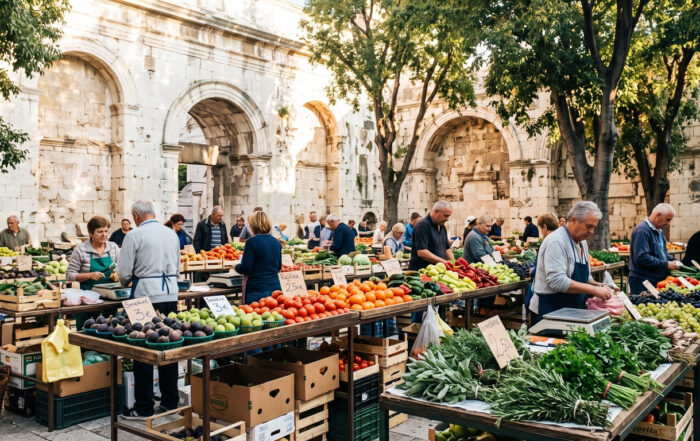
Local Markets in Split: From Fresh Produce to Authentic Souvenirs
Discover Pazar, the green market by Diocletian's Palace, and Peškarija, Split's historic fish market. Find out when to go, what to buy, which souvenirs are authentic and tips for your market visit.
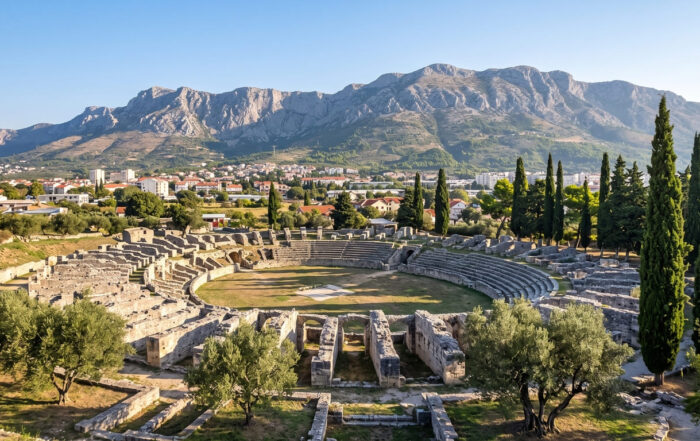
Exploring Ancient Salona: Roman Ruins Near Split
Explore ancient Salona, the Roman capital of Dalmatia just 6 km from Split. Discover the amphitheatre, Manastirine and Porta Caesarea, and find out how to get there, ticket prices and tips for your visit.

Split to Plitvice Lakes: How to Get There and Plan the Perfect Day Trip
Plan the perfect Split to Plitvice Lakes day trip with this practical guide. Compare driving, bus and organised tour options, travel times, entrances, tickets and useful tips for visiting the park.